Pilih jalurmu
Lebih spesifik
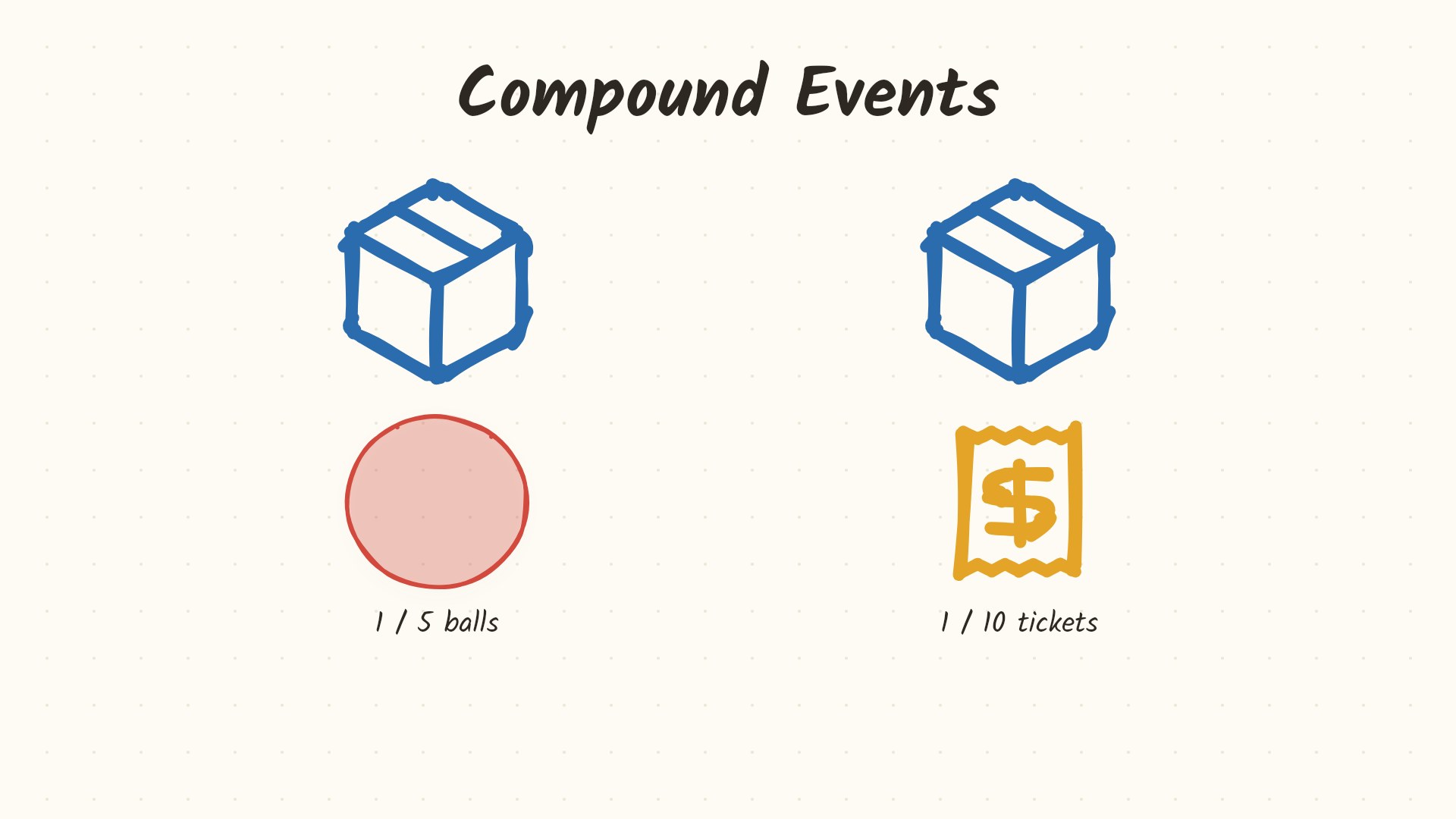
Imagine joining a game show: what are the odds of winning the grand prize if you must draw a red ball from Box A AND a golden ticket from Box B? Today we explore compound events.
These are independent events because one doesn't affect the other. Look at this tree diagram. First, you have a one in five chance for the red ball.
Then, a one in ten chance for the golden ticket. For independent events happening together, the 'AND' means we multiply. So, one fifth times one tenth equals a one in fifty chance to win.
Now, what about an 'OR' situation? Imagine drawing one card from a standard deck of fifty two. You win a minor prize if you get an Ace or a King.
Since a card cannot be both an Ace and a King at the same time, they are mutually exclusive. We simply add their probabilities: four over fifty two plus four over fifty two.
But watch out for this common trap! What if you win by drawing a King OR a Heart? If you blindly add the four Kings and thirteen Hearts, you get seventeen. That is wrong!
Why is it wrong? Because the King of Hearts was counted twice! We must subtract that one overlapping card. Look at this Venn diagram. The real answer is sixteen over fifty two.
To recap: 'AND' means multiply for independent events, like your one in fifty grand prize odds. 'OR' means add, but always subtract any overlap!